Electricity and Magnetism Cognitive Diagnostic (EMCD)
It is an advanced computerized adaptive test designed to evaluate how well students have mastered key skills or learning objectives in introductory and upper-level college courses in electricity and magnetism. With EMCD, instructors can:
- Customize Assessments: Select specific learning objectives to focus on.
- Provide Regular Feedback: Generate detailed reports that help track student progress, even on a weekly basis.
This tool empowers both instructors and students by identifying strengths and areas for improvement, ensuring a targeted and effective learning experience.
For Students:
- Start with Moderate Questions: The test begins with questions of average difficulty.
- Real-Time Adjustments: Based on your answers, the system dynamically selects and adjusts the difficulty of the next questions.
- Short and Accurate: This process ensures a tailored assessment with the minimum number of questions while accurately evaluating your skills.
For Instructors:
- Actionable Insights: After each test, detailed reports show students’ skill mastery and overall proficiency.
- Weekly Feedback: Receive updates on student performance, enabling timely adjustments to teaching strategies.
- Support Individual Needs: Use the insights to address specific challenges and improve student learning outcomes.
Detailed Reporting:
- Instructors: Access interactive reports that provide a clear overview of student proficiency and mastery of each objective.
- Students: Receive individualized feedback to track progress and focus on areas needing improvement.
How it Works?

Benefits of Using EMCD Assessments
on LASSO
Customizable: Instructors can choose specific learning objectives and administer assessments multiple times during a semester.
Efficient: AI adapts to each student, saving instructors time while maintaining accuracy.
Time: This test usually takes 30 minutes.
Actionable Feedback: Students receive detailed feedback to track their progress and focus on areas requiring attention.
Continuous Monitoring: Instructors can monitor and support student growth throughout the course.
EMCD covers 8 Learning Objectives
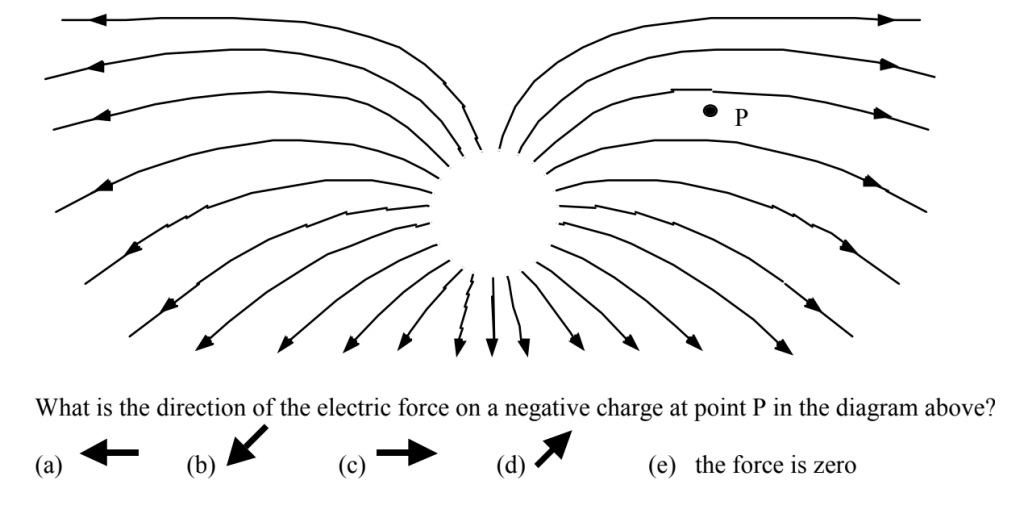
1. Electric Charges and Fields: Students understand the fundamental properties of electric charge and how charges interact through Coulomb’s law. Students are also able to describe and calculate electric fields, analyze field lines, and understand charge behavior in conductors and insulators.
2. Gauss's Law: Students are able to interpret electric flux, explain the meaning of Gauss’s law, apply it to calculate electric fields, and understand its implications for conductors in electrostatic equilibrium.
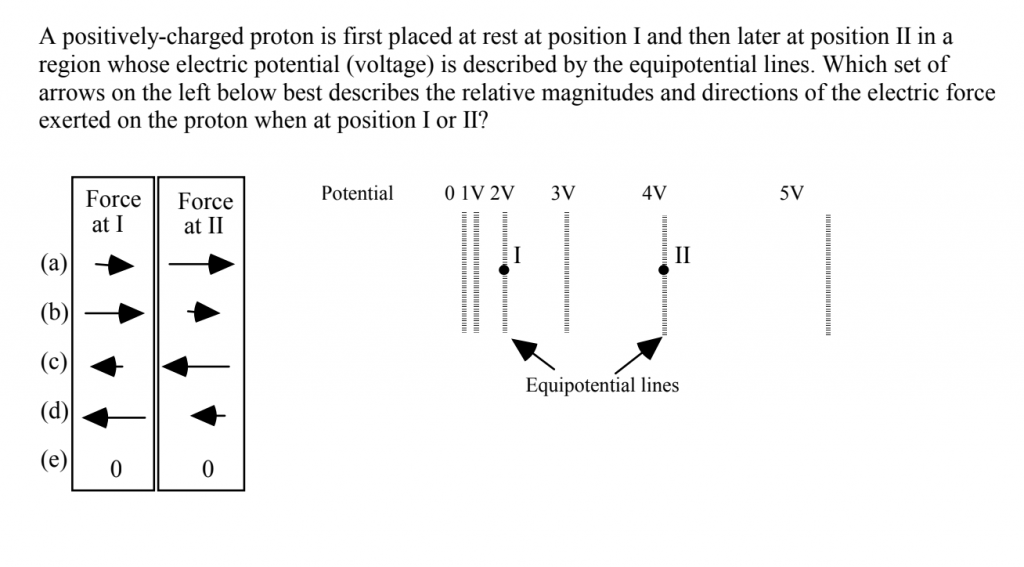
3. Electric Potential: Students are able to calculate electric potential, relate it to electric fields, and interpret equipotential surfaces.
4. Current and Resistance: Students understand conduction in metals, resistivity, and resistance, apply Ohm’s law, and calculate electrical energy and power.
5. Direct-Current Circuits: Students understand electromotive force, analyze series and parallel resistor networks, and apply Kirchhoff’s rules.
6. Magnetic Forces and Fields: Students are able to interpret magnetic field lines, analyze particle trajectories, calculate forces on currents and loops, and explore practical applications of magnetic phenomena.
7. Sources of Magnetic Fields: Students are able to use the Biot–Savart law and Ampère’s law, analyze fields from wires and current loops, explore interactions between parallel currents, and understand how materials respond to magnetic fields.
8. Electromagnetic Induction: Students are able to apply Faraday’s and Lenz’s laws, analyze motional emf and induced electric fields.
Example Questions
Research
Coming soon!
Example LASSO Report
The EMCD assessment provides fine-grained evidence of student understanding across key mechanics skills.
- Mastery by Skill – shows the percentage of students mastering each targeted learning assessments.
- Skill Mastery Combinations – displays all possible mastery profiles across multiple learning assessments.
- Skills Mastered Across Administrations – tracks student growth across repeated assessments.
- Comparison with Other Courses – compares average student performance with other courses on the LASSO platform.
Similar Instruments
More Information
Relevant papers about the cognitive diagnostic model and computerized adaptive test.
de la Torre, J., & Minchen, N. (2014). Cognitively diagnostic assessments and the cognitive diagnosis model framework. Psicología Educativa, 20(2), 89-97.
Morphew, J. W., Mestre, J. P., Kang, H. A., Chang, H. H., & Fabry, G. (2018). Using computer adaptive testing to assess physics proficiency and improve exam performance in an introductory physics course. Physical Review Physics Education Research, 14(2), 020110.
McGlohen, M., & Chang, H. H. (2008). Combining computer adaptive testing technology with cognitively diagnostic assessment. Behavior research methods, 40, 808-82.
Yu, X., Cheng, Y., & Chang, H. H. (2019). Recent developments in cognitive diagnostic computerized adaptive testing (CD-CAT): A comprehensive review. Handbook of diagnostic classification models: Models and model extensions, applications, software packages, 307-331.